 |
MASINDE MULIRO UNIVERSITY OF
SCIENCE & TECHNOLOGY ECE 531L - GLOSSARY OF TERMS - ANTENNA & RADIO WAVE PROPAGATION |
|
|
|
Absolute gain:
Of an antenna, for a given direction and polarization, the ratio of
(a) the power that would be
required at the input of an ideal isotropic radiator to
(b) the power actually
supplied to the given antenna, to produce the same radiation intensity
in the far-field region. Note 1:
If no direction is given, the absolute gain of an antenna corresponds to
the direction of maximum effective radiated power. Absolute gain is
usually expressed in dB. |
|
|
Absorption:
In the transmission of electrical, electromagnetic, or acoustic signals,
the conversion of the transmitted energy into another form, usually
thermal. Absorption is one cause of signal attenuation. |
|
|
Absorption loss:
That part of the transmission loss caused by the dissipation or
conversion of electrical, electromagnetic, or acoustic energy into other
forms of energy as a result of its interaction with a material medium. |
|
|
Acceptance pattern:
Of an antenna, for a given plane, a distribution plot of the off-axis
power relative to the on-axis power as a function of angle or position.
Note: The acceptance pattern is the equivalent of a horizontal or
vertical antenna pattern. Of an optical fiber or fiber bundle, a curve
of total transmitted power plotted against the launch angle. |
|
|
Active Antenna:
An antenna that has an active element or one that uses active
components. |
|
|
Active Element:
The element, of a multielement antenna, that is actually being driven by
an RF signal. |
|
|
Actual Ground:
The ground plane as seen by an antenna. Ground as determined by an
antenna my be the physical ground [earth] or an artificial ground plane
made from a conductive material. |
|
|
Adcock Antenna:
An antenna array consisting of four equidistant vertical elements which
can be used to transmit or receive directional radio waves. An out-dated
type of antenna. |
|
|
Aerial:
An antenna. The part of a radio system that radiates energy into space. |
|
|
Aerial Array:
An arrangement of any number of elements for radiating or receiving
signals in a directional manner. Also see Antenna Array, and Beam
Antenna. |
|
|
Aerial cable:
A communications cable designed for installation on, or suspension from,
a pole or other overhead structure. |
|
|
Aerodiscone Antenna:
See Discone Antenna. A [seldom used] term used describe a miniature
discone antenna designed for use on aircraft [Aeronautics]. |
|
|
Alexander Antenna.
A VHF antenna. |
|
|
Alford Antenna.
A square loop antenna. Related term Alford Slot Antenna. |
|
|
All-Wave Antenna.
An old term used to describe an antenna that operates over a wide
frequency range. |
|
|
Altazimuth mount:
A mounting, for a directional antenna or telescope, in which slewing
takes place in (a) the plane tangent to the surface of the Earth or
other frame of reference and (b) elevation about, i.e., above or below,
that plane. Synonym x-y mount. |
|
|
AM |
|
|
Amplification:
The process of increasing the strength (current, voltage, or power) of a
signal. |
|
|
Amplifier:
An electronic component that boosts the voltage or power level of a
signal that is a linear replica of the input signal, but with greater
power or voltage level, and sometimes with an impedance transformation.
The output may also be a nonlinear analog function of the input signal,
as in a signal compression device. Also See fiber amplifier, optical
repeater. |
|
|
Amplitude:
The level of an audio or other signal in voltage or current. The
magnitude of variation in a changing quantity from its zero value. |
|
|
Amplitude Modulation:
Modulation in which the amplitude of the carrier wave is varied above
and below its normal value in accordance with the intelligence of the
signal being transmitted. |
|
|
Back Scatter:
Radiated energy returned back to the antenna. |
|
|
Balanced antenna:
An antenna is balanced with respect to ground when both its arms have
the same electrical relationship to ground. |
|
|
Balanced transmission line:
A transmission line whose conductors have voltages of opposite polarity
and equal magnitude with respect to the Earth. |
|
|
Balun:
A device for feeding a balanced load with an unbalanced line, or vice
versa. An acronym for Balanced/Unbalanced. |
|
|
Band-Limited Audio.
An audio signal (typically consisting of voice, tones, and sounds) that
is limited to a subset of the audio spectrum. |
|
|
Bandwidth:
The width of a band of frequencies used for a particular purpose. A
range of frequencies, usually +/-3 dB of the amplitude of a reference
frequency. |
|
|
Baseband.
The band of frequencies occupied by a signal before it modulates a
carrier. |
|
|
Base-Loaded Antenna:
A vertical antenna that uses an inductor at the base of the antenna. |
|
|
Batwing Antenna:
The same basic shape as a Bowtie antenna. |
|
|
Beam:
The main lobe of an antenna radiation pattern. |
|
|
Bedspring Antenna:
Slang for an antenna array that looks like a bedspring, being a flat
broadside reflector. |
|
|
Beam steering:
Changing the direction of the main lobe of a radiation pattern. Note: In
radio systems, beam steering may be accomplished by switching antenna
elements or by changing the relative phases of the rf signals driving
the elements. In optical systems, beam steering may be accomplished by
changing the refractive index of the medium through which the beam is
transmitted or by the use of mirrors or lenses. |
|
|
Beam Width:
The angle, in degrees, between the half-power points (-3 dB) of an
antenna beam. Refer to the graphic in the right side-bar. |
|
|
Beverage antenna:
A horizontal, long-wire antenna designed for reception and transmission
of low-frequency, vertically polarized ground waves. Also called a Wave
Antenna. A single wire antenna that is two or more wavelengths long. |
|
|
Biconical Antenna:
An antenna consisting of two conical conductors, having a common axis
and vertex, and extending in opposite directions. |
|
|
Bidirectional Antenna:
In radiates two directions, or receives in two directions. |
|
|
Bidirectional array:
An array that radiates in opposite directions along the line of maximum
radiation. |
|
|
Bilateral Antenna:
An antenna with a maximum response in opposite directions. |
|
|
Billboard Antenna:
An array of parallel dipole antennas with flat reflectors, usually
positioned in a line or plane. |
|
|
Binomial Array:
A type of directional antenna array. |
|
|
Bird Cage Antenna:
Parallel lines of an antenna forming a cage. |
|
|
Blade Antenna:
A style of flat antenna used for a number of frequency ranges. Many
|
|
|
Blob:
Small areas of the atmosphere where temperatures and pressure
differences produce conditions suitable for the refraction of radio
waves. |
|
|
Boresight:
The physical axis of a directional antenna. |
|
|
Bowtie Antenna:
A style of antenna used for UHF reception [TV]. In some cases a
reflector may also be used. |
|
|
Broadband antenna:
An antenna capable of operation over a wide band of frequencies. |
|
|
Broadside antenna:
Synonym for billboard antenna. |
|
|
Broadside array:
An array in which the direction of maximum radiation is perpendicular to
the plane containing the elements. |
|
|
Cable:
An assembly of one or more insulated conductors, or optical fibers, or a
combination of both, within an enveloping jacket. A cable is constructed
so that the conductors or fibers may be used singly or in groups.
Certain types of communications cables, especially long submarine cables
but also terrestrial cables, whether the communications media are
metallic or optical fiber, may contain metallic conductors that supply
power to repeaters (amplifiers). |
|
|
Cable assembly:
A cable that is ready for installation in specific applications and
usually terminated with connectors. |
|
|
Cable connectors:
Fittings for cable ends which permit rapid connection and disconnection
with equipment or other cables. |
|
|
Cage Antenna.
An antenna with a number of parallel line arrange into a shape of a
cage. |
|
|
Capacitor Antenna.
Text in review. |
|
|
Capture Effect:
A phenomenon, associated with FM reception, in which only the stronger
of two signals at or near the same frequency will be demodulated. |
|
|
Carrier Power:
The average power supplied to the antenna transmission line by a
transmitter during one radio frequency cycle taken under the condition
of no modulation. |
|
|
Carrier Power:
The average power supplied to the antenna transmission line by a
transmitter during one radio frequency cycle taken under the condition
of no modulation. |
|
|
Cassegrain antenna:
An antenna in which the feed radiator is mounted at or near the surface
of a concave main reflector and is aimed at a convex secondary reflector
slightly inside the focus of the main reflector. Energy from the feed
unit illuminates the secondary reflector, which reflects it back to the
main reflector, which then forms the desired forward beam. The
Cassegrain antenna design is adapted from optical telescope technology
and allows the feed radiator to be more easily supported. |
|
|
Cassegrain Feed.
A main reflector that uses a feed pointed at a small reflector at the
end of a waveguide that reflects back to the main antenna reflector. |
|
|
Cellular Communications:
A cellular communications area is divided into smaller areas, called
cells, and transmissions are passed from cell to cell until they reach
their final destinations. Each cell must contain an antenna and
transmission facilities to pick up signals from another cell or from a
caller and to pass those signals on to an adjacent cell or to a caller
within the cell. Cells can be anywhere from a few kilometers to 32
kilometers in diameter. |
|
|
Center-fed:
[Current Feed] Transmission line connection at the electrical center of
an antenna radiator. Connecting the center of an antenna to a
transmission line which is then connected to the final (output) stage of
the transmitter. |
|
|
Circuit noise level:
At any point in a transmission system, the ratio of the circuit noise at
that point to an arbitrary level chosen as a reference. Note: The
circuit noise level is usually expressed in dBrn0, signifying the
reading of a circuit noise meter, or in dBa0, signifying circuit noise
meter reading adjusted to represent an interfering effect under
specified conditions. |
|
|
Circular Antenna.
A half wave antenna in the shape of a circle. |
|
|
Circular Polarization:
In electromagnetic wave propagation, polarization such that the tip of
the electric field vector describes a helix. The magnitude of the
electric field vector is constant. The projection of the tip of the
electric field vector upon any fixed plane intersecting, and normal to,
the direction of propagation, describes a circle. A circularly polarized
wave may be resolved into two linearly polarized waves in phase
quadrature with their planes of polarization at right angles to each
other. Circular polarization also referred to as "right-hand" or
"left-hand," depending on whether the helix describes the thread of a
right-hand or left-hand screw, respectively. |
|
|
dBa:
Abbreviation for decibels adjusted. Weighted absolute noise power,
calculated in dB referenced to 3.16 picowatts (-85 dBm), which is 0 dBa.
A one-milliwatt, 1000-Hz tone will read +85 dBa, but the same power as
white noise, randomly distributed over a 3-kHz band (nominally 300 to
3300 Hz), will read +82 dBa, due to the frequency weighting. Synonym
dBrn adjusted. |
|
|
dBc:
Abbreviation. dB relative to the carrier power. |
|
|
dBi:
Abbreviation. dB referenced to the gain of an isotropic antenna with 100
percent efficiency. |
|
|
Decibel:
The standard unit used to express transmission gain or loss and relative
power levels. |
|
|
Deflection:
The displacement of an electron beam from its line of sight path. |
|
|
Demodulate:
To recover the information originally impressed on the radio wave. |
|
|
Departure Angle:
The angle between the axis of the main lobe of an antenna pattern and
the horizontal plane at the transmitting antenna. |
|
|
Despun Antenna:
An antenna on a communications satellite with a main beam that is
continuously redirected with respect to the satellite so that the
antenna illuminates a given area on the surface of the Earth, i.e., the
footprint does not move with respect to the Earth. |
|
|
DF Antenna.
Direction Finding Antenna. |
|
|
Dielectric:
A material that does not conduct electricity, such as rubber or glass,
i.e. an insulator. |
|
|
Dielectric Antenna:
-- Text in Review. |
|
|
Diffraction:
The process by which electromagnetic waves are bent so that they appear
behind an obstruction. |
|
|
Diplex Operation:
The sharing of one common element, such as a single antenna or channel,
for transmission or reception of two simultaneous, independent signals
on two different frequencies. |
|
|
Dipole antenna:
A center-fed wire antenna whose conductors are in a straight line.
Usually a straight, center-fed, one-half wavelength antenna. |
|
|
Directional Antenna:
(1) An antenna designed to
transmit and receive RF energy in a specific direction(s).
(2) An antenna that radiates
most effectively in only one direction.
(3) An antenna that radiates
most effectively in some directions more than in others. An antenna in
which the radiation pattern is not omnidirectional. |
|
|
Directive Gain:
Of an antenna, the ratio of (a) 4% times the radiance, i.e., power
radiated per unit solid angle (watts per steradian), in a given
direction to (b) the total power, i.e., the power radiated to 4%
steradians. |
|
|
Direct waves:
Waves which propagate in a straight line from the transmitting to the
receiving antennas, which only occurs when the antenna are Line-of-Sight
[LOS]. The distance direct waves travel may be increased by increasing
the height of the antennas. Direct wave propagation does not use or
depend on sky waves. |
|
|
Directive Gain.
Of an antenna, the ratio of (a) 4% times the radiance, i.e., power
radiated per unit solid angle (watts per steradian), in a given
direction to (b) the total power, i.e., the power radiated to 4%
steradians. |
|
|
Directivity:
The property of radiating more energy in some directions than in others. |
|
|
Director:
A conductor placed in front of a driven element to cause directivity. |
|
|
Earth Station:
The ground-based portion of a satellite communications system, also
called a ground station. The station consists of an antenna and receiver
(or transceiver) that are in communication with a satellite in
geosynchronous orbit. |
|
|
Efficiency:
The ratio of power output to power input. |
|
|
Effective Antenna Height:
[Effective Height] The height of the center of radiation of an antenna
above the effective ground level. In low-frequency applications
involving loaded or non-loaded vertical antennas, the moment of the
current distribution in the vertical section divided by the input
current. Note: For an antenna with symmetrical current distribution, the
center of radiation is the center of distribution. For an antenna with
asymmetrical current distribution, the center of radiation is the center
of current moments when viewed from points near the direction of maximum
radiation. |
|
|
Effective Monopole Radiated Power:
[e.m.r.p.] The product of the power supplied to the antenna and its gain
relative to a short vertical antenna in a given direction. |
|
|
Effective Radiated Power:
[ERP] The antenna power times the antenna power gain squared. |
|
|
Electromagnetic field:
The field of force that an electrical current produces around the
conductor through which it flows. |
|
|
Electromagnetic waves:
A wave propagating as a periodic disturbance of the electric and
magnetic fields and having a frequency in the electromagnetic spectrum;
the means by which energy is transmitted from one place to another. |
|
|
Electrostatic Discharge:
[ESD] The rapid, spontaneous transfer of electrostatic charge induced by
a high electrostatic field. Usually the charge flows through a spark
(static discharge) between two bodies at different electrostatic
potentials as they approach one another. |
|
|
Element:
A part of an antenna that can be either an active radiator or a
parasitic radiator. |
|
|
Elevation:
The angle between the horizontal plane and the line of sight to a target
or object. |
|
|
Elevation-over-Azimuth Mount:
An antenna mounting style that uses the azimuth as the primary movement
and the elevation as the secondary movement. An alternate style is the
X-Y mount. |
|
|
Emission:
The electromagnetic energy radiated from an antenna. |
|
|
End-Fed:
An antenna whose power is applied to one end rather than at some point
between the ends. |
|
|
End-Feed Method.
A method in which one end of an antenna is connected through a capacitor
to the final output stage of a transmitter. |
|
|
End-Fire Array.
An array in which the direction of radiation is parallel to the axis of
the array. |
|
|
Fading:
A periodic decrease or increase in the received signal strength.
Variations in signal strength by atmospheric conditions. |
|
|
Fan Beam Antenna:
A directional antenna producing a main beam having a large ratio of
major to minor dimension at any transverse cross section. The picture
shows a Soviet era Fan Beam Radar station. |
|
|
Far-field Radiation Pattern:
A radiation pattern measured at the far field of an antenna or other
emitter. |
|
|
Feed: (1)
A coupling device between an antenna and its transmission line.
(2) To supply a signal to
the input of a system, subsystem, equipment, or component, such as a
transmission line or antenna. |
|
|
Feeder:
A transmission line that carries energy to the antenna. |
|
|
Feedpoint impedance:
Impedance that is measured at the input terminals of an electrical
device such as an antenna. |
|
|
Ferrite Rod Antenna:
An antenna formed by wrapping a wire around a ferrite rod, normally
found in AM receivers. Normally placed in parallel with a tuning
capacitor. |
|
|
Fields:
Regions in which each point has a value of a physical quantity (voltage,
magnetic force, velocity, mass, etc.). |
|
|
Flat Antenna:
A type of antenna with a flat shape. One style of indoor antenna used to
receive digital TV signals. |
|
|
Flexible Coaxial Line:
A coaxial line made with a flexible inner conductor insulated from the
outer conductor by a solid, continuous insulating material. Also refer
to the related terms. |
|
|
FM Discriminator:
A device that operates as a frequency to voltage converter. |
|
|
Folded Dipole:
An ordinary half-wave antenna (dipole) that has one or more additional
conductors connected across the ends parallel to each other. |
|
|
Four-Element Array:
An array with three parasitic elements and one driven element. |
|
|
Free space:
The absence of matter. |
|
|
Free space loss:
The loss of energy of a radio wave because of the spreading of the
wavefront as it travels from the transmitter. |
| Fresnel Zone: | |
|
|
Frequency:
The rate at which a process repeats itself. In radio communications,
frequency is expressed in Hz. |
|
|
Frequency hopping:
A method of jumping from frequency to frequency in synchronization with
one another in a random order at a rate of up to 100 times per second. |
|
|
Frequency Modulation:
The process of varying the frequency of a carrier wave, usually with an
audio frequency, in order to convey intelligence. |
|
|
Frequency of optimum transmission:
85 percent of the Maximum Usable Frequency (MUF). A practical frequency
selection which allows for MUF variations. |
|
|
Front-to-Back Ratio:
The gain of an antenna, in a specified direction. |
|
|
Half-Wave Antenna:
An antenna whose electrical length is half the wavelength of the
transmitter or received signal. |
|
|
Half-Wave Dipole Antenna:
A center-fed antenna whose electrical length is half the wavelength of
the transmitter or received signal. An antenna consisting of two rods
(1/4 wavelength each) in a straight line, that radiates electromagnetic
energy. |
|
|
Half-wave Vertical Dipole Antenna:
A half-wave dipole constructed vertical to the Earths surface. |
|
|
Harmonic Antenna.
An antenna with an electrical length that is an integral multiple of a
half wavelength. |
|
|
H-Bend:
A smooth change in the direction of the axis of a waveguide, throughout
which the axis remains in a plane parallel to the direction of magnetic
H-field (transverse) polarization. |
|
|
Height, Antenna:
The distance from the top of the antenna to the ground. Technical note;
Most antenna structures that are taller than 60.96 meters (200 feet)
above ground level or that may interfere with the flight path of a
nearby airport must be cleared by the Civil Aviation Authority and
registered with the Communication Authority of Kenya. |
|
|
Height Gain:
For a given propagation mode of an electromagnetic wave, the ratio of
the field strength at a specified height to the field strength at the
surface of the Earth. |
|
|
Helical Antenna:
An antenna with a spiral conductor wound around a cross section. An
antenna that has the form of a helix. Note: When the helix circumference
is much smaller than one wavelength, the antenna radiates at right
angles to the axis of the helix. When the helix circumference is one
wavelength, maximum radiation is along the helix axis. |
|
|
Hertz:
One cycle per second. |
|
|
Hertz antenna:
A half-wave antenna installed some distance above ground and positioned
either vertically or horizontally. |
|
|
High frequency:
Frequencies between 3 and 30 MHz. |
|
|
Hop:
A single reflection of the wave back to Earth at a point beyond the
horizon. |
|
|
Horizon Angle:
Of a directional antenna, the angle, in a vertical plane, subtended by
the lines extending from the antenna to the radio horizon and from the
antenna in its direction of maximum radiation. |
|
|
Horizontal dipole:
A dipole constructed parallel to the surface of the earth. |
|
|
Horizontal pattern:
The horizontal cross-section of an antennas three-dimensional radiation
pattern. |
|
|
Horizontal polarization:
Transmission of radio waves in such a way that the electric lines of
force are horizontal (parallel to the Earths surface). Waves that are
radiated with their E field component parallel to the Earths surface. |
|
|
Horn:
A funnel-shaped section of waveguide used as a termination device and as
a radiating antenna. |
|
|
Horn Antenna:
A
waveguide antenna that is wider at the open end. |
|
|
Horn Radiator.
A tapered, tubular or rectangular microwave antenna that is widest at
the open end. |
|
|
Hybrid Modulation.
A combination of modulation methods used to impress information on a
carrier. |
|
|
Image Antenna:
A hypothetical mirror-image, a virtual-image, of an antenna, an antenna
element, considered to extend as far below the ground plane, as the
actual antenna is above the ground plane. |
|
|
Impedance:
The total opposition offered by a circuit or component to the flow of
alternating current. |
|
|
Impedance match:
The condition where the load impedance equals the characteristic
impedance of a transmission line. |
|
|
Indirect Wave:
A reflected wave. |
|
|
Indoor Antenna:
An antenna designed to operate inside a structure. A TV antenna designed
to pick up TV stations inside a house: Note a TV antenna located outside
will always function better than an indoor antenna by picking up more TV
stations or providing better reception. |
|
|
Inductance:
The natural property of an electrical circuit which opposes the rate of
change or current, i.e., electrical intertia. |
|
|
In phase:
Two or more signals of the same frequency passing through their maximum
and minimum values of like polarity at the same instant. |
|
|
Insertion Loss:
The decrease in power delivered to a load when a device is inserted
between the source and the load. |
|
|
Insulator:
A device or material that has a high electrical resistance; a
non-conductor of electricity. |
|
|
Interference:
A degradation of a received signal caused by another transmitter, a
noise source, or the desired signal propagation over two or more
different routes. |
|
|
Inverted Cone Antenna:
A vertically polarized omnidirectional antenna used for broadband
communications. Refer to the drawing in the lower right. |
|
|
Inverted L Antenna:
A half-wave dipole fed by a one-quarter wavelength long vertical
section. |
|
|
Inverted Vee Antenna:
A half-wave dipole erected in the form of an upside-down V, with the
feed point at the apex. It is essentially omnidirectional, and is
sometimes called a dropping doublet. |
|
|
Ionization:
The process where radiation and particles from the Sun make some of the
Earths atmosphere partially conductive. |
|
|
Ionosphere:
A partially conducting region of the Earths atmosphere between 50 kms
and 400 kms high. |
|
|
Ionospheric Scatter:
The propagation of radio waves by scattering as a result of
irregularities or discontinuities in the ionization of the ionosphere. |
|
|
Isotropic Antenna:
A hypothetical antenna that radiates or receives equally in all
directions. |
|
|
J-Antenna:
A half-wave antenna. |
|
|
Lambda:
Used to represent a wavelength with reference to electrical dimensions
in antenna work. Represented by the Greek lower case, 11th
letter. |
|
|
L-Antenna:
A horizontal wire and a vertical wire attached together to form an L
shaped antenna. |
|
|
Left-Hand Polarized Wave:
An elliptically polarized electromagnetic wave in which the rotation of
the electric field vector is counterclockwise when looking in the
direction of propagation. |
|
|
Lens Antenna:
A microwave antenna that concentrates radiated energy using a dielectric
lens. |
|
|
Linearly Polarized Antenna:
Antennas that produce only one polarization. |
|
|
Line of sight:
[LOS]. The transmission path of a wave that travels directly from the
transmitting antenna to the receiving antenna. |
|
|
Load:
A device that consumes electrical power. |
|
|
Loading:
Providing or connecting an electrical device capable of accepting power
to match the impedance of an antenna to a transmitter so that maximum
power is radiated from a generating device, such as a transmitter. |
|
|
Lobe:
A bulge on an antenna radiation pattern which indicates the direction in
which radiated power is concentrated. An area of greater signal strength
in the transmission pattern of an antenna. An identifiable segment of an
antenna radiation pattern. |
|
|
Log-Periodic Antenna:.
A broadband, multi-element, unidirectional, narrow-beam antenna that has
impedance and radiation characteristics that are regularly repetitive as
a logarithmic function of the excitation frequency. |
|
|
Long-wire antenna:
An antenna that is a wavelength or more long at its operating frequency.
An end fed single wire antenna usually one wavelength or longer. An area
of a radiation pattern plotted on a polar-coordinate graph that
represents maximum radiation. |
|
|
Loop Antenna:
A style of antenna used for UHF reception [TV]. The shape of the antenna
is in the form of a wire loop. A loop antenna is sometime found in
combination with Rabbit Ears which are used to receive VHF channels. A
type of antenna, in the form of a circle or rectangle, usually used in
direction-finding equipment and in UHF reception. |
|
|
Loopstick Antenna:
See Ferrite Rod. |
|
|
Lowest usable frequency:
[LUF]. The lowest frequency that will not be absorbed by the ionosphere
or smothered by atmospheric noise. |
|
|
Log Periodic Dipole Antenna:
A type of directional antenna. Refer to the graphic in the right
side-bar. |
|
|
Magnetic Field:
The field produced when current flows through a conductor or antenna. |
|
|
Main Lobe:
The lobe containing the maximum power in an antenna radiation pattern. |
|
|
Major Lobe.
The lobe in which the greatest amount of radiation occurs. See Main
Lobe. |
|
|
Marconi antenna:
A quarter-wave antenna oriented perpendicular to the earth and operated
with one end grounded. |
|
|
Mast:
A vertical antenna tower. An antenna support. |
|
|
Maximum Usable Frequency:
[MUF] The highest frequency for a given elevation angle that will
reflect from an ionospheric layer. |
|
|
Minor Lobe Ratio.
The ratio of the major lobe amplitude to the highest minor lobe,
expressed in dB. |
|
|
Mobile Antenna:
An antenna used in mobile applications. |
|
|
Modulate:
To change the output of a transmitter in amplitude phase, or frequency
in accordance with the information to be transmitted. |
|
|
Monopole antenna:
An antenna with a single radiating element; a whip antenna. |
|
|
Multiband Antenna.
An antenna that may be used at more than one frequency band. |
|
|
Multicoupler.
A device used to interface one antenna to several receivers with a gain
of one or larger. |
|
|
Multielement Array.
An array that consists of one or more arrays and is classified as to
directivity. |
|
|
Multi-element Dipole Antenna:
An antenna consisting of an arrangement of multiple dipole antennas. |
|
|
Multielement Parasitic Array.
An array that contains two or more parasitic elements and a driven
element. |
|
|
Multipath:
The multiple paths a radio wave may follow between transmitter and
receiver. May also be called Multipath delay. Signals reaching a
receiving antenna by two or more separate paths. |
|
|
Multipath Distortion:
The distortion caused by a radio receiving the same signal from multiple
paths, at different times [delayed]. |
|
|
Multi-turn loop (MTL) Antenna
A loop antenna with more than one loop. |
|
|
Natural Frequency:
Of an antenna, the lowest frequency at which the antenna resonates
without the addition of any inductance or capacitance. |
|
|
Near Field:
A region generally in close proximity to an antenna or other radiating
structure in which the electric and magnetic fields do not exhibit a
plane wave relationship and the field strength does not decrease
proportionally with the distance from the source but varies
considerably. |
|
|
Necessary Bandwidth.
The width of a frequency band which is just sufficient to ensure the
transmission of information at the rate and with a quality required. |
|
|
Node:
The fixed minimum points of voltage or current on a standing wave or
antenna. |
|
|
Noise:
Random pulses of electromagnetic energy generated by lightning or
electrical equipment. Any unwanted disturbance or spurious signals which
modifies the transmission of a signal. |
|
|
Notch Antenna:
An antenna that has a notch or slot in its radiating surface. |
|
|
Null:
A zone in which the effective radiated power is at a minimum relative to
the maximum effective radiated power of the main beam in an antenna
radiation pattern. |
|
|
Nutating:
Moving an antenna feed point in a conical pattern so that the
polarization of the beam does not change. |
|
|
Offset angle:
The angle at which a long wire antenna must be aimed on either side of
the direction to the base station. |
|
|
Omnidirectional Antenna:
An antenna whose radiation pattern shows equal radiation in all
horizontal directions. An antenna that has a radiation pattern that is
non-directional in azimuth. |
|
|
Orange Peel Antenna:
An antenna shaped as the peel of an orange, with a long and narrow
reflector. Orange Peel antennas are used in radar applications. A style
of antenna used with search radar applications. |
|
|
Orthogonal Antenna.
An antenna with elements that are perpendicular to each other. |
|
|
Outdoor Antenna.
An antenna located outside a structure, normally elevated in height. |
|
|
Out of phase:
Two alternating quantities not passing through corresponding values at
the same time (e.g., if the current in a circuit reaches its maximum
value before or after the applied voltage does, the current is out of
phase with the voltage). |
|
|
Parabolic Antenna:
an antenna that uses a curved surface with the cross-sectional shape of
a parabola, to direct the radio waves. Also called called a dish antenna
or parabolic dish. |
|
|
Parabolic Reflector.
An antenna reflector in the shape of a parabola. It converts spherical
wavefronts from the radiating element into plane wavefronts. |
|
|
Parasitic Antenna:
An antenna that operates by receiving the radiation from another
antenna. |
|
|
Parasitic Array:
An antenna array containing one or more elements not connected to the
transmission line. An antenna with a driven element and one or more
parasitic elements. |
|
|
Parasitic Element.
The passive element of an antenna array that is connected to neither the
transmission line nor the driven element. |
|
|
Path loss:
The ratio of received power to transmitted power. The greater the
distance between the receiving antenna and the transmitting antenna the
greater the path loss. |
|
|
Pedestal:
The structure supporting an antenna. |
|
|
Pencil Beam:
A narrow circular radar beam from a highly directional antenna (such as
a parabolic reflector). |
|
|
Periodic Antenna:
An antenna whose impedance varies as the frequency does. An antenna that
has an approximately constant input impedance over a narrow range of
frequencies. |
|
|
Periscope Antenna:
An antenna configuration in which the transmitting antenna is oriented
to produce a vertical radiation pattern, and a flat or off-axis
parabolic reflector, mounted above the transmitting antenna, is used to
direct the beam in a horizontal path toward the receiving antenna. |
|
|
Phased Array Antenna:
A phase array is a group of antenna in which the relative phases of the
respected signals feeding the antenna are varied in such a way that the
effective radiation pattern of the array is reinforced in a desired
direction and suppressed in undesired directions. |
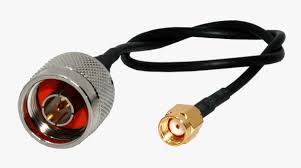 |
Pigtail: Ashort length of flexible braided wire connecting a stationary part to a moving part in an electrical device |
|
|
Pillbox Antenna:
A type of parabolic reflector. |
|
|
Planar Array:
An antenna in which all of the elements, both active and parasitic, are
in one plane. |
|
|
Polarization:
The direction of the electric field of a radiated wave relative to the
surface of the Earth (vertical, horizontal, linear, and circular). |
|
|
Polarization fading:
Fading due to polarization rotation of a received signal. The received
signal decreases when the incoming wave does not have the same
polarization as the receiving antenna. |
|
|
Power gain:
The directive gain of an antenna multiplied by its efficiency. In an
antenna, the ratio of its radiated power to that of a reference. |
|
|
Propagation:
A phenomenon by which any wave moves from one point to another; the
travel of electromagnetic waves through space of along a transmission
line. |
|
|
Propagation Delay:
The necessary time required for a signal to be transmitted from one
point to another. |
|
|
Propagation Path:
The path or route over which power flows from the transmitter to the
receiver. |
|
|
Propagation Loss:
The loss of energy caused by the spreading of an electromagnetic wave as
it travels through space. |
|
|
Q
Antenna.
A Dipole antenna matched to the transmission line by a stub. |
|
|
Quad antenna.
An antenna which consists of two square loops which are cut to a quarter
wavelength. |
|
|
Quarter-wave Antenna:
An antenna with an electrical length that is equal to one-quarter
wavelength of the signal being transmitter or received. As a Marconi
Antenna. A half-wave antenna cut in half, with one end grounded. |
|
|
Rabbit Ears Antenna:
A style of antenna used for VHF reception. Rabbit Ears may also be used
in combination with a UHF Loop Antenna. |
|
|
Radiate:
To transmit RF energy. |
|
|
Radiation:
Energy that moves through space as electromagnetic waves. |
|
|
Radiation Field:
The electromagnetic field that radiates from an antenna and travels
through space. |
|
|
Radiation Loss:
The part of the transmission loss because of radiation of radio
frequency power. |
|
|
Radiation Pattern:
A chart of relative radiation intensity (or power) versus direction. A
plot of the radiated energy from an antenna. The variation of the field
intensity of an antenna as an angular function with respect to the axis.
See the graphic in the side-bar. |
|
|
|
|
|
Radiation Resistance:
The resistance that, if inserted in place of an antenna, would consume
the same amount of power that is radiated by the antenna. |
|
|
Radio frequency:
[RF] Any frequency of electrical energy capable of propagation into
space (usually above 20 kHz). |
|
|
Radio horizon:
The greatest distance on the Earth at which a transmitted wave can be
received by the direct path from a transmitter located on the Earth. The
locus of points at which direct rays from an antenna are tangential to
the surface of the Earth. |
|
|
|
|
|
Radio waves:
Electromagnetic waves at a frequency lower than 3,000 GHz and propagated
through space without and artificial guide. |
|
|
Random Wire Antenna:
A wire antenna with a wire length which does not necessarily match the
wavelength being used. |
|
|
Received Noise Power.
The calculated or measured noise power, within the bandwidth being used,
at the receive end of a circuit, channel, link, or system. |
|
|
Receiver:
Amplifying and selecting equipment that receives radio frequencies and
delivers a duplicate of the information impressed on the transmitter. |
|
|
Receiving Antenna.
The device used to pick up the RF signal from space. Reception:
The process of recovering transmitted information; the process of
converting electro-magnetic fields to current in wires. The instant when
an electromagnetic wave passes through a receiver antenna and induces a
voltage in that antenna. |
|
|
Reciprocity:
The various properties of an antenna apply equally whether the antenna
is transmitting or receiving. The property of interchangeability of the
same antenna for transmitting and receiving. |
|
|
Reference Antenna:
An antenna that may be real, virtual, or theoretical, and has a
radiation pattern that can be used as a basis of comparison with other
antenna radiation patterns. |
|
|
Reference Dipole:
A dipole used as a reference antenna. |
|
|
Reflected waves:
Waves that change their direction of propagation after striking a
surface that is either a conductor or an insulator. |
|
|
Reflecting Layer:
In the ionosphere, a layer that has a free-electron density sufficient
to reflect radio waves. |
|
|
Reflection:
The turning back of a radio wave from an object or the surface of the
Earth. |
|
|
Reflective Array Antenna:
An antenna, such as a billboard antenna, in which the driven elements
are situated at a predetermined distance from a surface designed to
reflect the signal in a desired direction. |
|
|
Reflector:
In an antenna, one or more conducting elements or surfaces that reflect
incident radiant energy. The parasitic element of an array that causes
maximum energy radiation in a direction toward the driven element. |
|
|
Reflector Type Antenna:
An antenna placed in front of a conducting surface (reflector) for the
purpose of increasing radiation in one direction, at the expense of
radiation in other directions. |
|
|
Refraction:
The bending, or changing direction, of a radio wave passing into or
through layers of the atmosphere or the ionosphere that have different
density (dielectric constant). |
|
|
Refractive index:
A measure of the degree by which the speed of an electromagnetic wave is
slowed as it propagates through a given material. |
|
|
Right-Hand Polarized Wave:
An elliptically polarized electromagnetic wave in which the rotation of
the electric field is clockwise when looking in the direction of
propagation. |
|
|
Relay:
A radio station used for the reception and retransmission of signals
from another radio station. |
|
|
Repeater Station:
An intermediate point in a transmission system where signals are
received, amplified, reshaped and retransmitted. |
|
|
Resistance:
The property of a material or substance to oppose the passage of current
through it, thus causing electrical energy to be converted into heat
energy. |
|
|
Resonance:
The state or frequency of vibration, electrical or mechanical, in which
forces that impede the motion are minimum. |
|
|
Resonant Antenna:
See periodic antenna. |
|
|
Resonant length:
The proper length of an antenna to render it resonant. |
|
|
RF Bandwidth.
The width in frequency at a level of 6dB below the peak, which may
include a minor lobe which exceeds the -6dB level. Refer to the graphic
in the right side-bar. |
|
|
RFID Antenna:
An antenna designed to receive signals from a Radio Frequency
Identification [RFID] chip. |
|
|
Rhombic Antenna:
An antenna made of four wires of equal length connected together in the
shape of a rhombus. A directional antenna that is composed of long-wire
radiators that form the sides of a rhombus, the two halves of which are
fed equally in opposite phase at one apex. |
|
|
Rigid Coaxial Line:
A coaxial line consisting of a central, insulated wire (inner conductor)
mounted inside a tubular outer conductor. |
|
|
Rotary Beam Antenna:
A directional antenna used with Short Wave communication which is
mounted on a mast that can be rotated so that the antenna may point in
another direction. |
|
|
Scatter Angle:
The angle at which the receiving antenna must be aimed to capture the
scattered energy of tropospheric scatter. |
|
|
Scattering:
The spreading or breaking up of electromagnetic waves when they
encounter objects of different electrical properties than those in which
the wave is traveling. |
|
|
Schmidt Antenna:
A style of scanning microwave antenna. |
|
|
Selectivity:
A measure of the ability of a receiver to discriminate between a wanted
signal on one frequency and unwanted signals on other frequencies. |
|
|
Shortened dipole:
A dipole antenna made to resonate at a lower frequency by use of a coil. |
|
|
Side Lobe:
In a directional antenna radiation pattern, a lobe in any direction
other than that of the main lobe. A radiation lobe in any direction
other than that of the intended lobe. |
|
|
Signal:
A radio wave that contains the transmitted message. |
|
|
Signal loss:
The amount of signal power lost between the transmitter and receiver. |
|
|
Signal-to-noise ratio:
[ |
|
|
Single-polarized Antenna:
An antenna that radiates or receives radio waves with a specific
polarization. |
|
Single, Stationary-Lobe System.
Antenna (with a single, stationary beam) that is rotated to obtain
360-degree coverage. |
|
|
|
Skip Distance: The distances on the surface of the Earth between
the points where a radio wave sky wave leaves the antenna and is
successfully reflected and/or refracted back to Earth from the
ionosphere. At a given azimuth, the minimum distance between the
transmitting station and the closest point of return to the Earth of a
transmitted wave reflected from the ionosphere. |
|
|
Skip zone:
The space or region within the transmission range where signals from a
transmitter are not received, i.e., between the ground wave and the
point where the refracted wave returns. |
|
|
Sky wave:
A radio wave that is reflected from the ionosphere. A radio wave that
travels upward from the antenna. |
|
|
Slewing:
Rotating a directional antenna or transducer rapidly about one or more
axes. |
|
|
Sleeve Antenna:
A broadband, vertically polarized, omnidirectional antenna, primarily
used for receiving. A type half-wave antenna with the lower portion
covered by a metal sleeve. |
|
|
Sloping long-wire antenna:
A wire antenna of length greater than one wave-length and supported in
an inclined orientation with respect to the ground. A single wire
antenna is shown, but a sloping Vee antenna is also used in some
applications. |
|
|
Slot Antenna:
A radiating element formed by a slot in a conducting surface or in the
wall of a waveguide. |
|
|
Slotted Waveguide Antenna:
A waveguide used as an antenna. |
|
|
Space Wave:
Waves that travel in a direct path between the transmitting antenna and
receiving antenna, or that are reflected from the surface of the earth. |
|
|
Spill-over:
The part of the antenna's radiated energy from the feed that does not
impinge on the reflectors. |
|
|
Spiral Antenna:
An RF antenna which is shaped as a spiral, and used in the microwave
region. A Multi-arm spiral antenna has more than one arm. |
|
|
Spoiler Antenna:
An antenna used to change (spoil) the antenna pattern of a second
antenna so as to reduce the nulls in the pattern of the second antenna.
See also Null Fill. |
|
|
Spreader:
Insulator used with transmission lines and antennas to keep the parallel
wires separated. |
|
|
Spring Mount:
A type of antenna mount or base used in mobile application. See the
graphic below. |
|
|
Stacked Dipole Antenna:
An antenna configuration which increases its directivity by adding a
number of identical dipole antenna elements. An array of dipole antennas
mounted on the same antenna mast. |
|
|
Standing-wave:
The distribution of voltage and current formed by the incident and
reflected waves which have minimum and maximum points on a resultant
wave that appears to stand still. |
|
|
Standing-wave ratio:
[SWR] The ratio of the maximum to minimum amplitudes of voltage, or
current, along a transmission line. |
|
|
Standing waves:
Waves that appear not to be moving as the result of power traveling in
both directions along a transmission line. |
|
|
Steerable Antenna.
An antenna having a main lobe that may be shifted in direction. A
directional antenna. |
|
|
Stratosphere:
The second layer of the Earths atmosphere, extending from 10 to 50 km. |
|
|
Stub:
Short section of a transmission line used to match the impedance of a
transmission line to an antenna. |
|
|
Superheterodyne:
The process of translating a high frequency to a lower frequency. |
|
|
Superturnstile Antenna:
A stacked antenna with radiation elements shaped like a bat-wing. Each
element in the array is a batwing antenna. |
|
|
Surface Wave.
Electromagnetic waves that travel along the surface of the earth from
the transmitter to the receiver. One component of a ground wave that
also consists of a space wave. |
|
|
T-Antenna:
A wire antenna in the shape of a 'T'. |
|
|
Test Antenna:
An antenna of known performance characteristics used in determining
transmission characteristics of equipment and associated propagation
paths. |
|
|
Take-off angle:
(1)
The angle measured from the surface of the earth or horizontal up to the
direction of propagation towards the ionosphere.
(2)
The angle above the horizon that an antenna radiates the greatest
amount of energy. |
|
|
Three-Element Array:
An array with two parasitic elements (reflector and director) and a
driven element. |
|
|
Top-Hat:
An antenna that is center-fed and capacitively loaded. |
|
|
Tracking Antenna:
An antenna that can be made directional, or automatically follow a
moving target. An antenna which moves the position of its major lobe so
that a selected moving target is contained within the major lobe. |
|
|
Transmission line:
A conductor that transfers radio frequency RF energy from the
transmitter to the antenna or from the antenna to the receiver. |
|
|
Transmittance:
The ratio of the transmitted power to the incident power. |
|
|
Transmitter:
A piece of equipment that generates and amplifies a radio frequency,
adds intelligence to this signal, and then sends it out into the air as
a radio frequency wave. |
|
|
Transmitting Antenna:
The device used to send the transmitted signal energy into space. |
|
|
Triatic:
A special type of monopole antenna array. |
|
|
Troposphere:
The region of the Earths atmosphere from the surface to a height of
about 10 km. |
|
|
Truncated Paraboloid:
A paraboloid reflector [antenna] that has been cut away at the top and
bottom to increase beam width in the vertical plane. |
|
|
Tuned Dipole.
A dipole antenna that resonates at its operating frequency. |
|
|
Tuning:
The process of adjusting a radio circuit so that it resonates at the
desired frequency. |
|
|
Turnstile Antenna:
A type of antenna used in
VHF
communications that is omni-directional and consists of two horizontal
half-wave antennas [dipole antenna] mounted at right angles to each
other in the same horizontal plane. |
|
|
Twin-lead transmission line:
A balanced transmission line generally used with balanced antennas. |
|
|
Twin Whip Antenna:
A pair of whip antennas that are connected together when they are closer
than 25 feet from each other. A pair of whip antenna's driven by the
same source is shown in the diagram to the right. |
|
|
Two element array:
An antenna composed of two element antennas. |
|
|
Ultrahigh frequency:
[UHF] Frequencies between 300 and 3,000 MHz. Used for TV channels 14-51
[470MHz to 698MHz] |
|
|
Umbrella Antenna.
An antenna atop a mask that uses guy-wires to wire elements are pulled
downward from the central mask resembling an umbrella, used for
transmission in the LF and VLF frequency ranges. |
|
|
Unbalanced transmission line:
A transmission line one of whose conductors is grounded. |
|
|
Unidirectional Array:
An array that radiates in only one general direction. |
|
|
Uniform Linear Array:
An antenna composed of a relatively large number of usually identical
elements arranged in a single line or in a plane with uniform spacing
and usually with a uniform feed system. |
|
|
Unmodulated Carrier:
The portion of a carrier wave that contains no intelligence. |
|
|
V
Antenna.
A bidirectional antenna, shaped like a V, which is widely used for
communications. An antenna whose elements are in the shape of a 'V' |
|
|
Vee Antenna:
Two long-wire antennas connected to form a V. A directional antenna. |
|
|
Velocity:
The speed of a radio wave through the dielectric medium it is in. |
|
|
Vertical dipole:
A balanced or dipole antenna oriented vertically. |
|
|
Vertical Gain:
The gain of the antenna in the vertical (overhead) direction. |
|
|
Vertical polarization:
[vertically-polarized] Transmission of radio waves in such a way that
the electric lines of force are vertical (perpendicular) to the Earths
surface. |
|
|
Vertical quarter-wave antenna:
A monopole (whip) antenna that is oriented vertically. |
|
|
Very high frequency:
[VHF] Frequencies between 30 and 300 MHz; transmissions that follow the
line of sight path. Used for TV channels 2-13 [54MHz to 216MHz] |
|
|
Voltage standing-wave ratio:
[VSWR] The ratio of the amplitude of the electric field or voltage at a
voltage maximum to that at an adjacent voltage minimum. |
|
|
Waveguide:
A hollow metal tube used as a transmission line to guide energy from one
point to another. |
|
|
Wavelength:
The distance a wave travels during one complete cycle. It is equal to
the velocity divided by the frequency. |
|
|
Wave Propagation:
The transmission of RF energy through space. |
|
|
Whip antenna:
A vertical monopole. A flexible rod antenna, usually between 1/10 and
5/8 wavelength long, supported on a base insulator. |
|
|
Wind Load:
The wind speed the antenna is capable of withstanding. |
|
|
Wire Rope Antenna:
A wire rope antenna consists of one or more lengths of flexible wire
rigged from two or more points and used as either a receiving antenna or
transmitting antenna. If used on a ship, a wire rope antenna is strung
either vertically or horizontally from a yardarm or mast to outriggers,
another mast, or to the superstructure. Also the antenna maybe
specifically designed for a particular ship, as the superstructure and
other nearby structures become an electronically integral part of the
antenna. |
|
|
Wullenweber Antenna:
An antenna array that uses two concentric circles of antenna arrays. |
|
|
X-Band.
A range of frequencies between 8GHz and 12GHz. |
|
|
X-Y Mount:
A style of antenna mounting that uses the X-axis as the primary mount
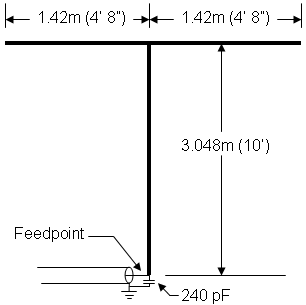
and the Y-axis as the secondary mount. |
|
|
Yagi Antenna.
A multi-element parasitic array. The elements lie in the same plane as
those of the end-fire array. A linear end-fire antenna, consisting of
three or more half-wave elements (one driven, one reflector, and one or
more directors). A Yagi antenna offers very high directivity and gain.
The formal name for a Yagi antenna is Yagi-Uda array. |
.JPG)
.JPG)
.JPG)
.JPG)
.JPG)
.gif)
.png)
.jpg)
.jpg)
.gif)
.jpg)
.gif)
.png)
.png)
.JPG)
.jpg)
.jpg "Antenna Main Lobe")
.jpg)
.gif)
.jpg)
.png)

.gif)


.jpg)

.JPG)
.JPG)
.png)
.jpg)

.jpg)
.png)
.jpg)
.jpg)
.png)
.jpg)
.JPG)
.gif)

.jpg)
.JPG)
.jpg)
.jpg)